




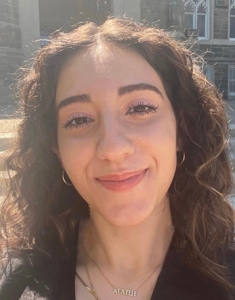
Sara Tsugranis is a graduate of Fordham University with a B.A. in Political Science with minors in Orthodox Christian Studies and Medieval Studies. She received the Fr. John Meyendorff Undergraduate Achievement Award for Academic Excellence in Orthodox Christian Studies. Passionate about advocating for a wide range of issues heavily affecting women, Sara was the first intern hired at the St. Phoebe Center for the Deaconess, where she then became a board member for several years. Sara has worked in the Department of Communications at the Greek Orthodox Archdiocese of America and is currently a J.D. candidate at New York Law School (NYLS).
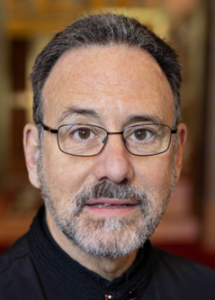
Fr. Harry was born and raised in St. Louis, and educated at Davidson College, Holy Cross Greek Orthodox School of Theology, Harvard Divinity School, and Yale University, where he earned a Ph.D. in the Old Testament. Along with 41 years of pastoral experience in various parishes (primarily Nashville, Minneapolis, New Rochelle & Stamford), he has taught courses in Biblical Hebrew (Yale), Old Testament, Pastoral Theology & Practice, Preaching, and Parish Administration (Holy Cross & St. Vladimir’s Seminaries).
Fr. Harry currently serves as a “supply priest” for the Greek Orthodox Archdiocese, provides guidance to clergy (such as leading a Peer Group) and laity, leads Bible Studies, speaks at Retreats (sometimes together with his wife) and Conferences, and advises National Philoptochos Caregiver Support Groups. He is a member of the Orthodox Theological Society of America, a Board Member of the International Orthodox Theological Society, and a member of the Advisory Board of the Huffington Ecumenical Institute.
Fr. Harry has been enriched profoundly through his marriage to Kerry (Kaloudis) for 45 years since they met at Seminary, together with three children, their spouses, and seven grandchildren.
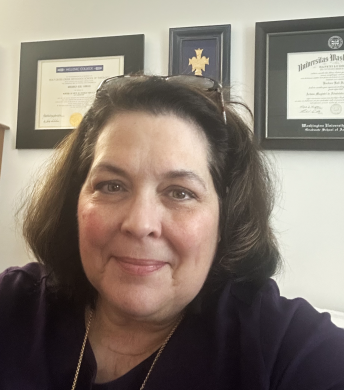
Barbara lives and volunteers in St. Louis. She is a graduate of Holy Cross Greek Orthodox School of Theology, has earned an MA in Nonprofit Management from Washington University, and holds a BA in music education with lifetime teacher certification in both Missouri and Illinois (general and instrumental music education, grades K-12). Her special interests include the practical application of theology, the ethical stewardship of resources, and therapy dog training.
Over the past thirty-five years, Barbara has worked in a variety of roles in the Greek Orthodox Archdiocese of America including church school director, curriculum committee chair, children’s library developer, retreat coordinator, middle school teacher, adult religious educator and lecturer, YAL officer, JOY counselor, Ionian Village counselor and administrator, junior choir and senior choir director, organist, and chanter.
Barbara was a founding board member and advisory board member of St. Catherine’s Vision (SCV), for over 10 years. She contributed two chapters to Volumes I and II of the Encountering Women of Faith books, as well as articles printed in Praxis Magazine and the Greek Orthodox Theological Review. She also collaborated with two other women to produce The Great Feasts, a three-volume vacation church school curriculum published by the Greek Orthodox Archdiocese of America’s Department of Religious Education.
For the past 12 years, Barbara has been actively involved in training, evaluating, and placing therapy dogs at a local children’s hospital and in other community organizations. She is grateful to be able to visit all ages of people in a variety of therapeutic settings with her two therapy dogs.
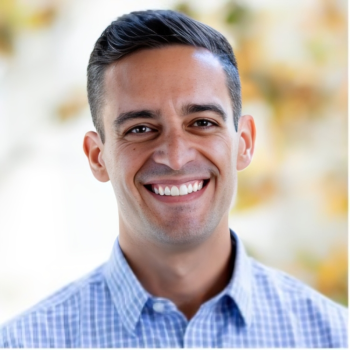
Andy was raised in the Orthodox Church and is an Associate Professor of Biology at Point Loma Nazarene University in San Diego. As a marine biologist, he conducts research on the behavior, ecology, and conservation of sharks and rays. As an Orthodox Christian, he is interested in the intersection of science and faith and has authored a paper on this topic as part of the Templeton-funded Project SOW (Science and Orthodoxy around the World). Additionally, Andy commissioned and fundraised for a new Byzantine-style icon of Creation for his university, titled “The Transfiguration of Creation,” which is inspired by the writings of Maximus the Confessor and seeks to integrate God’s Word with God’s World. This new icon, completed in 2024, was endorsed and blessed by His All-Holiness, Bartholomew, Patriarch of Constantinople.
Andy is very involved with his parish, Saint Gregory of Nyssa Greek Orthodox Church of El Cajon, California, and has been an elected member and officer (Secretary) of the Parish Council since 2023. Andy teaches church school for his parish’s young adults and cofounded a congregational server ministry for girls in 2022. His daughter and other girls serve in this program every Sunday, where they hold candles for liturgical entrances and Gospel readings, lead processions, and hold the antidoron. Andy is excited to be a board member at the Saint Phoebe Center and to work to help Orthodox girls and women realize their full potential in serving Christ and His Church.
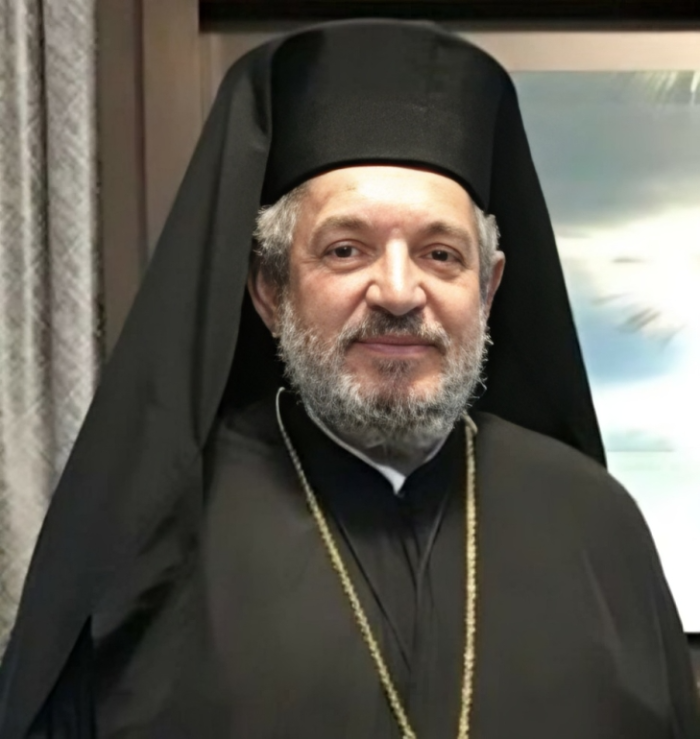
His Eminence Seraphim of Zimbabwe was born in Galatis, Cyprus. He felt his calling to serve at an early age and, at 12 years old, was accepted as a novice at the Monastery of Kykkos. In 1991, while still pursuing his education, he was ordained to the Holy Priesthood and elevated to the rank of Archimandrite on the same day. In 1997, His Eminence became the director of the seminary in Riruta and was enthroned as Archbishop of Kenya. In 2005, His Eminence consecrated the first monastery in South Africa, the Monastery of Saint Nectarios. In 2010, he became the Representative of the Patriarch of Alexandria at many international conferences, including the European Union and the United Nations. In this role, he also visited the United States to meet with Metropolitan Tikhon of Washington, discussing relations between the Church of America and the Patriarch of Alexandria.
Archbishop Seraphim considers himself an ecologist. He preaches that everything received from God must be returned, without corruption. He notes that the best ecologists are the saints who teach kindness and a loving way towards all things.
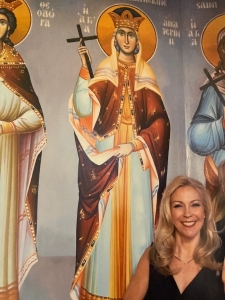
After a 2003 lecture by and conversations with Elisabeth Behr-Sigel, of blessed memory, Mardi began her journey in exploring the valued role of deaconesses in the Orthodox Church and its historic tradition. Having been raised by missionary parents and seeing firsthand the practical- and essential – role of women in the Church, she followed the model of her parents to become actively involved in Orthodox Christian ministries such as helping found an Orthodox Chaplaincy in NYC with Fr. Dr. John McGuckin where she served as Cantor and Reader, holding staff positions at Antiochian Village Orthodox Camp, and a variety of other ministries such as choir director, Sunday School teacher, and retreat lecturer. Mardi’s experience in the Orthodox Church has been greatly influenced by her travels to Syria, Ghana, Mexico, and India where she has interviewed Church leaders, monks, nuns, and laity about the relevance of Orthodox practice in the modern world. She has been employed as a teacher in both public and private schools for more than 20 years where she taught health, psychology, and theatre arts.
Mardi’s academic background is founded in the dramatic arts including a double major in Speech/Drama and Psychology and a Minor in Theology. After beginning her professional career in film and stage, Mardi earned a graduate degree in Theater Performance from Circle in the Square Theatre School in NYC. She is an active member of Screen Actors Guild, American Federation of Television and Radio Artists, and Actors Equity Association. Mardi and her husband have 3 children and split their time between NYC and upstate NY.
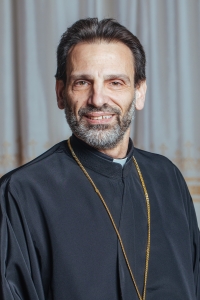
Fr. Philip Zymaris obtained his Th.D. from the Aristotle University in Thessaloniki
in the year 2000. He joined the faculty of Holy Cross Greek Orthodox School of
Theology in 2005. Since then, he has been teaching in the areas of Liturgics,
Sacramental Theology, Rubrics and Canon Law. His main interests center around
how liturgical practice, church architecture and iconography reflect a specific
liturgical vision. Most recently he has been concentrating on the anthropology
reflected in the long history of our liturgical texts, and how this concurs or not
with the official theology of the Church as expressed in the councils.
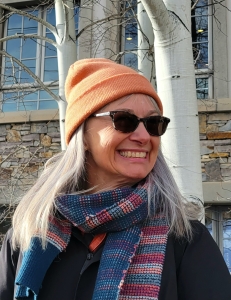
Jennifer Nahas has worked across many sectors – not for profit, private, and public – to strengthen programs and policies that foster resiliency in young people. She co-founded Brigham Nahas Research Associates (BNRA), a Massachusetts firm specializing in evaluation research and data-oriented strategic planning for organizations promoting success for young people in high school, college, and beyond. There she led local and national evaluation studies and worked with a variety of stakeholders to implement best practices. Across all her professional endeavors, Jennifer has worked with diverse teams to articulate guiding principles, understand data, and leverage outcomes to create lasting systematic change toward a more peaceful and just world.
More recently, Jennifer has been working directly with women and young people interested in outdoor exploration toward personal growth through mental, physical, and spiritual challenges She believes that it’s in the wild, untamed, and natural places that we not only find our best selves, but we experience an intimate relationship with God. A certified ski instructor and an outdoor mediative guide trained in spiritual facilitation and accompaniment, Jennifer strives to inspire others to awaken to a lifelong love of the outdoors as a means of experiencing the peace and love of God.
Jennifer is a founding member of Axia, a network by, for, and about Orthodox women. She has served on the Executive Board since the beginning and heads Axia’s efforts in renewal and retreat opportunities for Orthodox women. In her previous role as Executive Director of Orthodox Christian Fellowship, she brought her knowledge of outcome indicators and data analysis to overseeing 300 campus-based fellowships, organizing national student conferences, and implementing alternative spring break service trips in domestic/overseas locations. She developed the OCF servant leadership training program that is still used today. Prior to being a leader in campus ministry, Jennifer started her career at the City of Boston’s mayoral summer youth jobs program and honed her research and management skills at Brandeis University’s Heller School, where she earned a Master of Management in Human Services. She has developed workshops across a variety of subjects, most recently on Walking the Camino, and continues to write about women and the Eastern Orthodox Church.
Jennifer splits her time between Telluride, Colorado, and Cambridge, Massachusetts. She is a Antiochian Christian, born and raised in Brooklyn, New York where she was an active member of St. Mary’s. She attends St. Mary’s Church in Cambridge, Massachusetts. Outside of church-going, she participates in yearly pilgrimage walks.
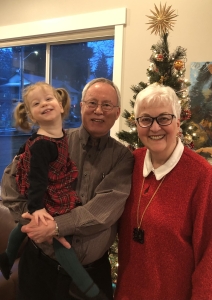
Paul Meyendorff was the Father Alexander Schmemann Professor of Liturgical Theology at St. Vladimir’s Orthodox Theological Seminary from 1987 to 2016. He also served as academic dean, associate editor at St. Vladimir’s Seminary Press, and editor of St. Vladimir’s Theological Quarterly.
Active in the ecumenical movement, Professor Meyendorff has participated in the Faith and Order Commission of both the National Council of Churches (NCC) and the World Council of Churches (WCC). His ecumenical work dovetails with his responsibilities as an advisor to the Department of External Affairs of the Orthodox Church in America (OCA), a position he has held since 2000. Representing the OCA, he was a delegate to the 8th General Assembly of the WCC in Harare, Zimbabwe, in 1998; a consultant to the OCA delegation to the 9th General Assembly of the WCC, in Porto Alegre, Brazil, in 2006; and a delegate to the 10th General Assembly, in Busan, Korea, in 2013. He is also a long-time member of the St. Irenaeus Orthodox-Catholic Working Group.
He is author of several articles and books, including from St. Vladimir’s Seminary Press (SVS Press):
St. Germanus of Constantinople, On the Divine Liturgy, translation, introduction and commentary (1984).
Russia, Ritual, and Reform: The Liturgical Reforms of Nikon in the 17th Century (1991).
The Anointing of the Sick, Orthodox Liturgy Series 1 (2009).
The Service of the Anointing of the Sick, editor and translator (2009).
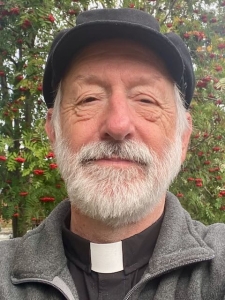
Fr. Marc Dunaway is an archpriest in the Antiochian Archdiocese of North America and pastor of Saint John Orthodox Cathedral in Eagle River, Alaska. With his sons, Benjamin and John Marc, he also directs the Eagle River Institute of Orthodox Christian Studies, held each summer August 1-5. He is on the Advisory Council of the Orthodox Christian Studies Center at Fordham University, and recently worked with the International Orthodox Theological Association in Volos, Greece to produce a new series of 23 IOTA Talks. He is married 40 years to his wife Betsy, and together they have four children and 9 grandchildren.
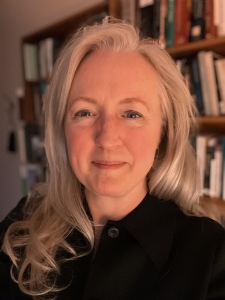
Dr. Lori Peterson Branch is associate professor of Restoration and Eighteenth-Century English Literature at the University of Iowa. She has published widely on literature, religion, and the postsecular, from the fourth-century Sayings of the Desert Fathers to seventeenth-century Dissent, contemporary Gothic novels, and Eastern Orthodoxy. With her collaborator Mark Knight she has co-taught two NEH Summer Seminars for faculty on religion, secularism, and the novel. Between 2012-2024 she solicited, selected, and edited 21 volumes for the monograph series Literature, Religion, and Postsecular Studies for Ohio State University Press. Beginning in 2024, she co-edits the Literature and Religion since 1500 Cambridge Elements series for Cambridge University Press. She is currently at work on a book project titled Beyond Secularism: Postsecular Reason, an interdisciplinary manifesto for moving the humanities and social sciences beyond the secular-religious binary birthed in modernity.
Dr. Branch also serves on the Board of Directors for IOTA, the International Orthodox Theological Association, and with Rev. Dr. Chrysostom Koutloumousianos she co-chairs its “Orthodoxy and Literature” group. She is a founding member of St. Raphael Antiochian Orthodox Church in Iowa City, Iowa, where she chants, directs the choir, leads a parish book group, directs the Sunday School program, and serves on the stewardship committee. In 2023, she was delighted to sing in the world premiere of the Jubilee Liturgy of St. John Chrysostom, composed by Mother Katherine Weston, at the Fellowship of St. Moses the Black conference held in Houston, TX. She lives in Iowa City with her husband and twin daughters, who are also members of the St. Phoebe Center and enthusiastic supporters of its mission.
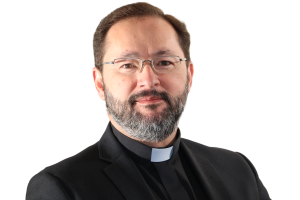
Fr. Radu Bordeianu is an Associate Professor at Duquesne University in Pittsburgh – USA. His research focuses on ecumenical ecclesiologies. He is the author of two monographs entitled, Dumitru Staniloae: An Ecumenical Ecclesiology (2011, Romanian translation 2022), and Icon of the Kingdom of God: An Orthodox Ecclesiology (2023). He is also the editor of It is the Spirit Who Gives Life: New Directions in Pneumatology (2022). He served as President of the Orthodox Theological Society of America, is a member of the North American Orthodox-Catholic Theological Consultation (the official dialogue of the two churches), and co-chair of the “Romanian Orthodoxy” group of the International Orthodox Theological Association. He is also involved in local intra-Christian and Christian-Jewish dialogues, and he serves as an Orthodox priest.
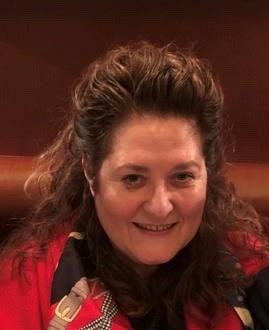
Dr. Elizabeth H. Prodromou is a lifelong Orthodox Christian who draws on her faith as the wellspring of her academic, policy, and practitioner work. Elizabeth is currently a Visiting Scholar in the International Studies Program at Boston College, where she will join the faculty beginning in the 2023 academic year. Her research interests and policy work focus on the intersections of geopolitics, religion, and human rights, with particular focus on the Eastern Mediterranean and Middle East. Elizabeth served a diplomatic appointment on the U.S. Commission on International Religious Freedom (2004-2012), and she was a member of the U.S. Secretary of State’s Religion & Foreign Policy Working Group (2011-2015). She has published widely on Orthodox Christianity, as co-editor of Eastern Orthodox Christianity and American Higher Education: Theological, Historical, and Contemporary Reflections and Thinking through Faith: Perspectives from Orthodox Christian Scholars, and in multiple book chapters and academic journals such as Journal of World Christianity, Journal of Democracy, Journal of the American Academy of Religion, and Social Compass. She sits on the editorial board of The Review of Faith & International Affairs and The Journal of World Christianity and Co-Chairs the Orthodoxy, Politics, and International Relations Group of the International Orthodox Theological Association. Her policy and practitioner appointments include the Atlantic Council’s Eurasia Center (Non-Resident Senior Fellow), as well as Religions for Peace (Co-President), and the Freedom of Religion or Belief Women’s Alliance (Alliance Advisor).
Elizabeth is active in service to the Church in local and global contexts. She was a member of the delegation of the Ecumenical Patriarchate to the Holy and Great Council at Crete in 2016, and she is a member of the Ecumenical Patriarchate’s Task Force on Modern Slavery. She has designed leadership programs for Orthodox Christians in the United States and Europe. Elizabeth has done parish council service, contributes regularly as a speaker in the CrossRoad Summer Institute, and is a regular speaker to Orthodox clergy and lay group, as well as to ecumenical and inter-religious organizations. She grew up in the Greek Orthodox parish of Holy Trinity in Portland, ME, where she was an organist and choir member and where her parents and priests taught her that the Church is a place of love, freedom, and fullness for all, a message and experience that she brings to her commitment to St. Phoebe’s.
She holds a Ph.D. and an S.M. in political science from MIT, an M.A.L.D. from The Fletcher School at Tufts University, and a B.A. in history and international relations from Tufts University, where she graduated Phi Beta Kappa and summa cum laude.
Elizabeth and her husband, Dr. Alexandros K. Kyrou, live in Bedford, MA. They are happy parents to their daughter, Sophia Kyrou. As family, they try to serve the Church creatively and joyfully. Alexandros is an Archon of the Ecumenical Patriarchate, has served on local parish, and teaches on Byzantium and Eastern Europe; Sophia is a tonsured Byzantine chanter and reader in the Greek Orthodox Church and served on the CrossRoad Summer Institute Alumni Advisory Board.
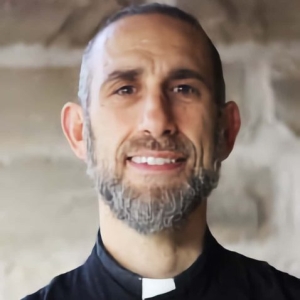
Deacon Sal has been the Diaconate Program Director of Outreach for Hellenic College Holy Cross Greek Orthodox School of Theology (HCHC) in Brookline Massachusetts since February of 2017. He has been a guest speaker and organizer/supporter of diaconate retreats and events to strengthen diaconate fellowship throughout the Greek Orthodox Archdiocese of America.
Deacon Sal was ordained to the Holy Diaconate on December 20, 2009. He and his wife Diakonissa Angela have two sons Andreas and Elias. He is the owner of Electrical Systems Engineering Inc. Consulting firm, and is also a Master in several Martial Arts. He and Diaconissa, who is a Martial Arts instructor, personal trainer, and wellness educator, work together in their business Christian Martial Fitness. Their mission is to encourage others to “train hard, stay prayerful and live healthy.”
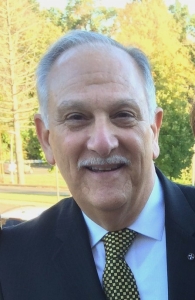
Dr. Cary J. Limberakis is the Archon Regional Commander of the Order of Saint Andrew the Apostle, Greater Philadelphia Region. He is a steward of the St. Sophia, Saints Faith, Hope and Agape Greek Orthodox Church in Jeffersonville, PA, and the St. Luke Greek Orthodox Church in Broomall, PA. He has been a member of the Parish Council at both parishes, President at St. Luke, served on the Metropolis of New Jersey Metropolitan Council.
Dr. Limberakis received a B.A from the University of Pennsylvania, an M.S. from Villanova University, and a D.M.D. from the University of Pennsylvania School of Dental Medicine. He is a general dentist who works alongside his son at their practice in the Philadelphia area. Together, they have travelled to Mount Athos to render dental care to the monks at Vatopedi Monastery.
Throughout his dental career, Dr. Limberakis has been involved with the American Dental Association at the executive level at the local, state and national levels.
Dr. Limberakis and his wife Alexis have four children and three grandchildren. His daughter, Kyra, was a former member of the St. Phoebe Center board.
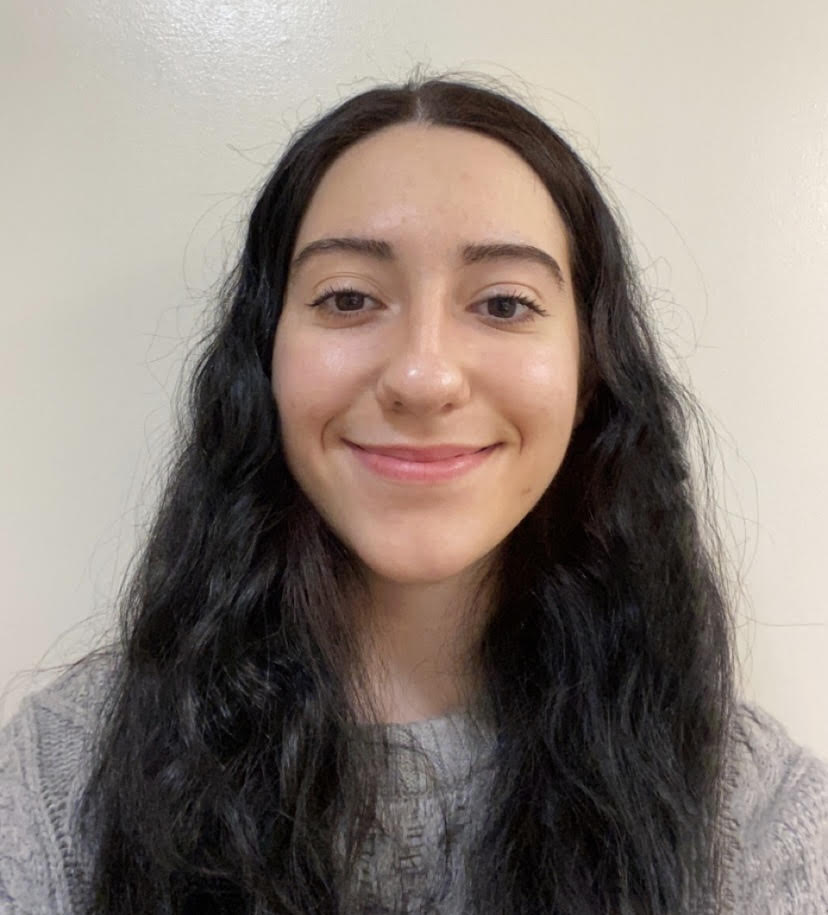
Sara graduated from Fordham University with a B.A. in Political Science and minors in Orthodox Christian Studies and Medieval Studies. She was the president of Fordham University’s chapter of the Orthodox Christian Fellowship (OCF). She is passionate about advocating for issues that heavily affect women. Sara started a youth-led community organization in her hometown of Fort Lee, New Jersey that focused on providing mental health resources for teens, and help for those impacted by domestic violence and sexual assault. She was also a junior commissioner for Bergen County New Jersey’s Commission on the Status of Women.
Sara is currently working at AHRCNYC, a non-profit that supports people with disabilities to obtain employment. Her role covers a wide range of responsibilities, but they all contribute to the mission of AHRCNYC to advocate for people who are neurodiverse to lead full and equitable lives.
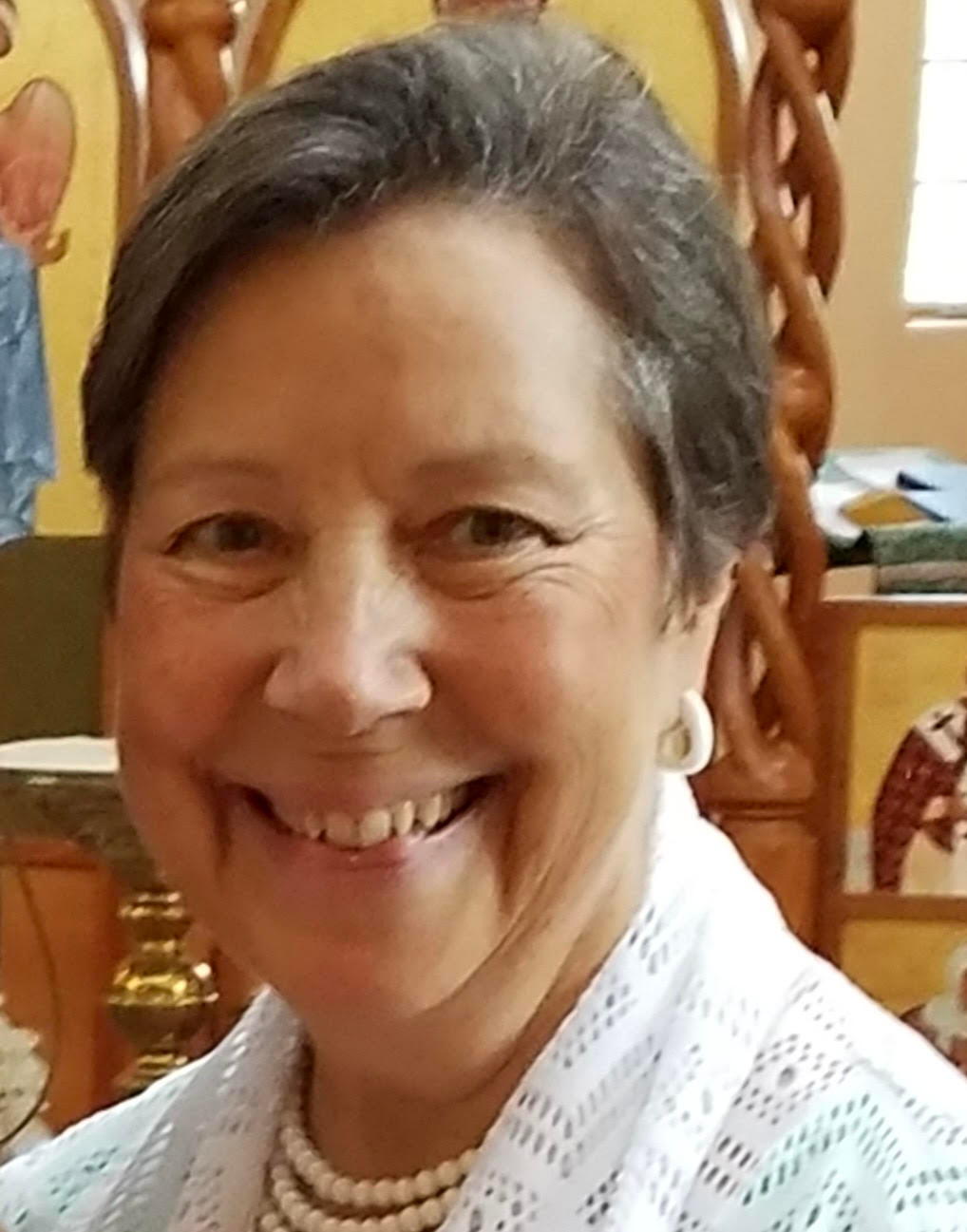
Susan has served the Orthodox Church in various ways. She is a wife and mother and has enjoyed a career with the U.S. Army Corps of Engineers as an economist, a policy analyst, and as a project, program, study, and quality manager. She is also a facilitator and an educator, having taught as a substitute teacher in the public school system for more than a decade. Her graduate degrees include a Diploma in Economics from Essex University, Colchester, U.K., while a Rotary International Scholar; and an MBA from the Graduate School of Business, University of Chicago. She completed undergraduate studies in economics and public policy at Kalamazoo College, Michigan, which included study at University of Erlangen, Germany, and Syracuse University, New York.

Valerie is an adjunct instructor of religion at Lindenwood University. From 2005 to 2012, she was assistant professor of church history at the Perkins School of Theology at Southern Methodist University. From 2003 to 2004, Valerie served as research associate at the Thesaurus Linguae Graecae, an online digital Greek library based at the University of California, Irvine, and from 1998 to 2003 she was assistant professor of Greek Patristics in the Department of Theological Studies at Saint Louis University. In 1993, Valerie came to Holy Cross Greek Orthodox School of Theology as a fellow-in-residence, then continued as assistant professor at both Holy Cross and Hellenic College from 1994 to 1996. From 1996 to 1997, she served Hellenic College and Holy Cross as Assistant Director for Institutional Planning and Special Projects. She has also been an adjunct lecturer in the Departments of Classics and Religious Studies at Washington University in St. Louis.
Valerie has earned doctorates in patristic theology from the Aristotelian University of Thessaloniki and in church history from The Catholic University of America in Washington, DC. She also holds a Master of Theological Studies degree from Holy Cross Greek Orthodox School of Theology.
Valerie’s areas of research interest include women in early and Byzantine Christianity, gender in early church theology; and Orthodox Christianity in ecumenical, interreligious, and feminist conversation. She has published articles, translations, and book reviews in scholarly journals such as Church History, the Journal of Early Christian Studies, Studia Patristica, and Theological Studies; and in books such as the Cambridge Companion to Feminist Theology (Cambridge University Press), Holy Women of Byzantium (Dumbarton Oaks), Justification and the Future of the Ecumenical Movement (Liturgical Press), and Thinking through Faith (St. Vladimir’s Seminary Press). Valerie is completing revisions to her first book, Women in the Byzantine Liturgy, which will be published by Oxford University Press; she is also co-editing a volume on Orthodox perspectives on war with Perry Hamalis.
Dr. Karras has been widely invited to lecture, also presenting papers at numerous academic conferences throughout the U.S. and abroad. She is a member of the editorial board of The St. Nina Quarterly, an international journal for Orthodox women, and has served on the boards of directors of the North American Academy of Ecumenists, the Society for Buddhist-Christian Studies, and the Collegeville Institute for Ecumenical and Cultural Research at St. John’s University in Minnesota. Dr. Karras has also been a member of the steering committees of the Eastern Orthodox Studies Group and the History of Christianity Section for the American Academy of Religion. She is a member of several academic and professional organizations, and has been awarded fellowships, grants, and other recognition. Dr. Karras’ avocation is music: she plays piano, has sung in numerous symphonic and other choruses, and holds a diploma in Byzantine music from Greece. Her church music experience includes having served as chanter, choir director, and organist at various Orthodox parishes.
Dr. Demetra (Dee) Velisarios Jaquet, D.Min., is retired from 25 years of professional life as a Pastoral Counselor, CPE Supervisor, Spiritual Director, and Adjunct Professor. She taught Religious Studies at Regis University, Denver and was a Pastoral Counselor/Spiritual Director at Pastoral Counseling for Denver (PCD). She was a Board Certified Chaplain in the Association of Pastoral Counselors (APC) and a Supervisor of Clinical Pastoral Education (CPE) in the College of Pastoral Supervision (CPSP) and in the Center for Spiritual Caregivers and Pastoral Formation (CSCPF). She was also a Fellow in the American Association of Pastoral Counselors (AAPC).
In 1988 she founded Orthodox People Together (OPT) which published the first directory of American Orthodox parishes in all (SCOBA) jurisdictions, and sponsored four conferences on Orthodox unity. She also founded the Women’s Orthodox Ministries and Education Network (WOMEN) in 1994, which publishes the St. Nina Quarterly, and she serves on its Editorial Board. WOMEN also sponsored several conferences throughout the U.S. about the ministries of women in the Orthodox Church, plus one international conference with Bishop KALLISTOS Ware in England.
For many years Dr. Jaquet was an Orthodox representative to the Colorado Council of Churches and the Women’s Interfaith Alliance in Denver. She was an Orthodox representative at three European World Council of Churches (WCC) conferences and at several interfaith conferences of women theologians in America. In 1993 she received a blessing from His Eminence Metropolitan Isaiah of Denver for her ministry as a Pastoral Counselor and Interfaith Chaplain. She served as a Chaplain at Central Presbyterian Men’s Homeless Shelter, the Hospice of St. John, the Centura Health Hospice Facilities, Swedish Hospital, Porter Adventist Hospital, Presbyterian-St. Luke’s Hospital, and North Suburban Hospital, all in Denver.
Dr. Jaquet is a past president of the Orthodox Christian Association of Medicine, Psychology and Religion (OCAMPR), Boston. She began as a chanter and choir member when a teenager with her dad, John C. Velon, of blessed memory, who was a Byzantine Music scholar, Protopsaltis and choir master at St. George Greek Orthodox Church in Rock Island, Ill. She continued in other parishes, finally at St. Catherine Greek Orthodox Church, Denver. She currently is a member of St. Nicholas Greek Orthodox Church, Grand Junction, Colorado.
Dr. Jaquet holds a B.A. in Philosophy from Augustana College, Rock Island, Ill. (Lutheran), an M.Div. from Iliff School of Theology, Denver (Methodist), a D.Min. from Pittsburgh Theological School (Presbyterian) and Antiochian House of Studies (Antiochian Orthodox), and a Certificate of Orthodox Studies from Holy Cross School of Theology (Greek Orthodox). She also holds a Certificate in Spiritual Direction from St. Thomas Roman Catholic Seminary in Denver. She has published numerous articles on Orthodoxy Christianity and women’s ministries.
In addition to serving on the St. Phoebe Advisory Board, Dr. Jaquet currently volunteers teaching Spiritual Direction classes and providing Supervision and Spiritual Direction for the Benedictine Spiritual Formation Program in Grand Junction, Colorado. She also serves on the Board of the Rocky Mountain Center for Spiritual Caregivers (RMCSC), Grand Junction, and on national committees for the Center for Spiritual Care and Pastoral Formation (CSCPF), headquartered in California. She is active in the Orchard Mesa Centering Prayer Group, the God and Earth Women’s Study Group, and the Community-Building Coalition, all in Grand Junction.
She and her husband of 42 years, Neil Jaquet (also retired), own and operate Ambelos Vineyards in Grand Junction where they are commercial growers of wine grapes, peaches, apricots and hay. They bicycle, hike, and hunt for petroglyphs throughout the Southwest for fun. Their daughter Anastasia McCune, husband and three grandchildren live in the Denver area, and their son Christopher Jaquet, wife and two granddaughters live in Telluride, Colorado.

Fr. McGuckin has served as Professor of Byzantine Christianity at Union Theological Seminary (UTS), Department of Religion, Columbia University, New York since 2002, where he also holds the title of Endowed Senior Chair. Fr. McGuckin has also been the Nielsen Professor of Late Antique and Byzantine Christian History, at UTS since 2006. Prior to coming to UTS, Fr. McGuckin was Senior Lecturer in New Testament & Early Christian Theology at the University of Leeds, Leeds, England, where he also served as Dean for Undergraduate Studies. Fr. McGuckin also held several positions at LSU College of Higher Education, in Southampton, England, including Principal Lecturer & Head of Department.
Fr. McGuckin completed Doctoral Studies in Patristics at Durham University, England. He holds a Certificate in Education (PGCE) from Newcastle University, where he was winner of the Armstrong Prize. He has served on numerous committees and in noted positions at the University of Leeds, UTS, and Columbia University, including Faculty Representative, Burke Library Fellows, Scholarship Committee at UTS ; and Presidential Search Committee. At Columbus University, Fr. McGuckin has been part of the Executive Committee of the Harriman Center (Eastern European Studies) since 2000; and a committee member for the Certificate in Medieval Studies since 2007.
Fr. McGuckin has been a Visiting Professor at The University of Kiev – Mohyla Academy; The Orthodox Theological Faculty of Sibiu, Romania; Baia Mare University, Theology Dept, Faculty of Humanities, Romania; The Royal Academy of Norway: Institute for Advanced Research. Oslo; Sergei Posad – Moscow Patriarchal Theological Academy; and Bucharest Faculty of Theology.
Rev. Dr. Perry Hamalis is Cecelia Schneller Mueller Professor of Religion at North Central College (Naperville, IL). In 2015-16, he was a Fulbright Senior Fellow and Underwood Visiting Professor at Yonsei University (Seoul). A deacon of the Orthodox Metropolis of Korea, he teaches, writes, and lectures on Christian Ethics, and is the co-editor, with Valerie Karras, of the book, Orthodox Christian Perspectives on War (University of Notre Dame Press).
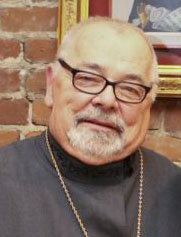
Prior to entering semi-retirement in 2011, Fr. Daniel Rentel was rector of St. Gregory of Nyssa Orthodox Church in Columbus, Ohio. He is most noted for two distinct contributions to 21st century Orthodoxy: Fr. Dan built his parish into a model of urban existence and outreach. Today, the parish experiences a unique relationship with its neighbors by providing hot meals several times a week, a food pantry, opportunities for learning basic work skills, and building self-confidence. In return, the neighbors have provided construction, landscaping, building, security, and cooking services to the parish. He also did away with the notion of an elected council served by a president and returned to the more historically authentic model of a council that was appointed, served by a lay vice-chair, and operating by consensus rather than voting.
Fr. Dan graduated from St. Tikhon’s Seminary, and earned a Masters in History from Penn State. He also received a fellowship to study Byzantine History at The Ohio State University (OSU), where he completed doctoral studies (ABD). He became certified in education and spent 25 years as a teacher in the Columbus Public School System.
While serving his first parish, St. John the Baptist Church in Philipsburg, PA, he became involved with the OCF at nearby Penn State University. His experience there helped him when he arrived in Columbus, Ohio, in 1983, to build an Orthodox presence for students attending OSU, as well as nearby private colleges. He also established a mission in Cincinnati before arriving in Columbus. His position as a teacher, however, enabled him to serve St. Gregory’s with little financial compensation for many years, an agreement he agreed to and endorsed. As a result, St. Gregory of Nyssa continues to serve as a example of true Christian love for its neighbors, a refuge for college students, and a place of worship for Orthodox Christians throughout Central Ohio.

Metropolitan Kallistos (Timothy Ware) is widely known for his writings on the history and worship of the Orthodox Church, and for his work in inter-Christian dialogue. Born in 1934, he joined the Orthodox Church in 1958, and he was ordained priest in 1966 and bishop in 1982. He is a member of the monastic brotherhood of St John the Theologian on the island of Patmos, Greece. For thirty-five years (1966-2001) he taught Orthodox theology in the University of Oxford, and in 1966 he founded the Greek Parish of the Holy Trinity in Oxford. He is Orthodox Co-Chairman of the International Anglican-Orthodox Theological Dialogue, and he is also a member of the International Commission for Theological Dialogue between the Orthodox Church and the Roman Catholic Church. He holds six honorary doctorates, and is a corresponding member of the Academy of Athens. His best-known publications are The Orthodox Church (Penguin Books) and The Orthodox Way (St Vladimir’s Seminary Press). He is a co-translator of three volumes of material from the Orthodox service books, and of four volumes of The Philokalia.
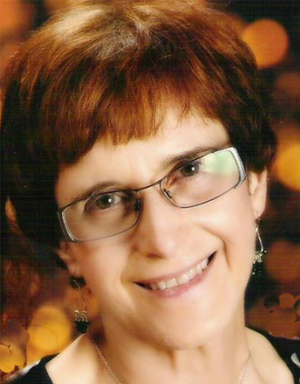
Helen has been active in the Orthodox Church and in theological education in various ways for many years. She received a Master’s Degree in Theological Studies from Holy Cross Greek Orthodox School of Theology in Brookline, MA, and both the Master’s and PhD degrees in Theology from the University of Chicago Divinity School.
Helen is currently adjunct professor at St. Sava Serbian Orthodox School of Theology in Libertyville, IL, teaching the study of the Church Fathers, and Christianity in America. She has also been a Lecturer at Loyola University Chicago and at the University of St. Mary of the Lake/ Mundelein Seminary in Mundelein. She is a board member and Secretary of the Orthodox Theological Association in America (OTSA).
In her home parish, Helen taught the high school Church school class for many years, and currently teaches the weekly adult Bible Study group and a bi-monthly adult religious education program. In addition, she has lectured to Orthodox and ecumenical religious groups on the local, diocesan, and national levels, and has presented papers at multiple conferences. Helen and her husband Evan are the parents of three daughters.
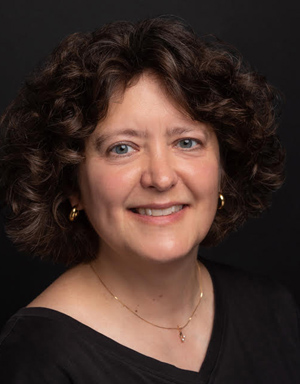
Teva was raised in the Orthodox Church and has been an active member for all of her life. For many years she was involved in the work of youth ministries in the Church, working on the national level of the American Romanian Orthodox Youth (AROY) and serving two years as the national president. During much of this time, she also worked in campus ministry, organizing and coordinating various Orthodox Christian Fellowships. For the past twenty years, her worked has focused on the ministry of women in the Church. For over fifteen years, she served as Managing Editor of the St. Nina Quarterly, a publication dedicated to exploring the ministry of women in the Orthodox Church and one which aims to cultivate a deeper understanding of ministry in the lives of all Orthodox Christian women and men. In addition, Teva served as an Orthodox consultant for a number of consultations on women and men in the church sponsored by the World Council of Churches.
A life-long student of theology, Teva completed her Master of Divinity degree at Holy Cross Greek Orthodox School of Theology in 2007, graduating with highest distinction. In addition to the ministry of young people and women, she is very interested in the Church’s liturgical life. For the past few years, she has focused her studies on liturgical theology and history. She received her PhD in liturgical theology from Boston College.
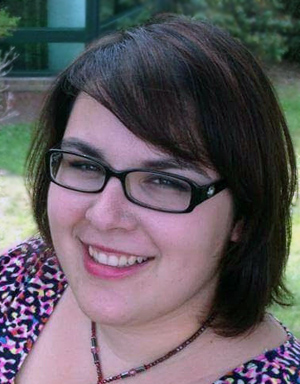
Rachel is a Trinity Fellow at Marquette University, working on her master’s in theology with a specialization in theology and society. She is focusing on the role of women in the Orthodox Church both historically and today. She will finish her MA in 2021.
Before starting her master’s degree, Rachel managed private fundraising, and worked on advocacy at the Alliance to End Homelessness in Suburban Cook County, a nonprofit coalition working to end homelessness on the systemic level. She is passionate about the nonprofit sector and the role the Church can play in helping those struggling with poverty. Prior to that, in 2015 she earned her Bachelor of Religious Studies at Hellenic College.
A life-long Orthodox Christian, Rachel has struggled to understand her place in the Church. Through studying theology and getting to know the work of the St. Phoebe Center, however, she is eager to work towards the restoration of the deaconess, and hopes that in the future fewer women will struggle to find their footing in the Church.
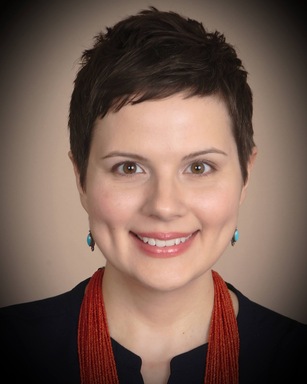
Kristina is a board-certified art therapist and credentialed art therapy supervisor. She received her MPS in Art Therapy and Creativity Development from Pratt Institute in 2011. She has worked in a variety of mental health settings providing therapy for adults and children with Autism Spectrum Disorder, PTSD, addictions, and chronic mental illness. Kristina is dedicated to strengthening the field of art therapy by providing clinical supervision, leading community workshops and supporting her local and national art therapy associations.
Kristina has grown up in the Orthodox Church, as the daughter of a priest/army chaplain. From early childhood, she was encouraged to read, sing, and serve as an acolyte. As an adult, she has been inspired by the example set by her grandmothers, mother, and godmother. She has served on parish councils, taught church school, worked in the church office, and helped organize parish fundraisers and community events.
In 2015, Kristina cofounded the handmaiden ministry at the OCA Cathedral of the Holy Virgin Protection in NYC with Juliana (Mecera) Federoff so that the girls of their parish could actively participate in the divine services. Kristina has advised other OCA parishes on how to start this ministry for their girls.
In addition to working with the St. Phoebe Center, Kristina is a member of the Orthodox Association for Medicine, Psychology, and Religion (OCAMPR).
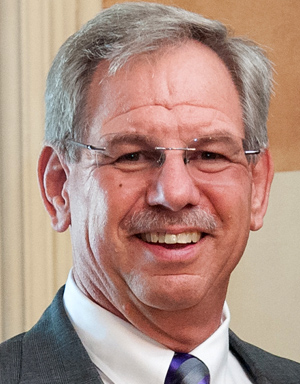
Prior to retirement, Gust was a construction manager with the McDonald’s Corporation for 30 years. In that position, he was responsible for capital improvements with budgets between $5 and $40 million dollars. Prior to joining McDonald’s, Gus was a civil engineer with Franklin County in Columbus, Ohio.
He served on Parish Council as Building Committee Chair at St. Gregory of Nyssa Orthodox Church in Columbus, Ohio for over 25 years. He oversaw the $325,000 conversion of a former office building into the current church building; the $70,000 fellowship hall renovation; the $50,000 sanctuary beautification project, and currently, a potential one million dollar expansion project.
Gust was a Church School teacher for the high school class at St. Gregory’s for eight years. He currently attends St. Stephen the Protomartyr Church in Orlando, Florida, where he serves as Treasurer on Parish Council. He and his wife Ann Marie have been married since 1979, and have two daughters and a grandchild.
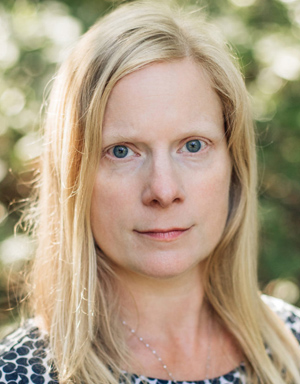
Carrie is a lifelong Orthodox Christian and a scholar of Orthodox theology. She received her doctorate in Theology, Ethics, and Culture from the University of Virginia. She works on motherhood, family, children, theological anthropology, iconography, theology in literature, and contemplative prayer. In her book Maternal Body: A Theology of Incarnation from the Christian East (Paulist Press) she reflects on motherhood and embodied theology for wide audience. She edited a volume of women writing about the Holy and Great Council of 2016, The Reception of the Holy and Great Council: Reflections of Orthodox Christian Women (GOARCH), and she has also written many articles on the topic of deaconesses, including “A Flourishing Diaconate Will Ground—Not Predetermine—Conversation about the Women in the Priesthood” published in Women and Ordination in the Orthodox Church – Explorations in Theology and Practice edited by Gabrielle Thomas and Elena Narinskaya.
In addition to her work with the St. Phoebe Center, she is on the Board of the International Orthodox Theological Association (IOTA). She teaches theology at Saint Sophia Ukrainian Orthodox Seminary and religious studies at Western Washington University. She is married with five children, and she resides in Bellingham, Washington.
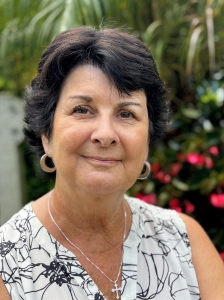
Ann Marie became passionate about the woman’s role in Orthodoxy after research conducted for a paper she presented at the University of Leeds, and years of involvement in the Orthodox Church. She was convinced that the time was right to build awareness for the historical female diaconate and the potential that existed in restoration of this ordained role.
With a degree in journalism from Ohio University, Ann Marie has worked in the marketing field for 40 years. She has been an independent marketing strategist for over three decades. Ann Marie wrote the religious education manual for pre-schoolers titled “A Way of Life: Introducing Your Children to the Orthodox Faith”, which has been called ‘by far the best resource for introducing pre-schoolers and younger children to the faith.’ She served for nearly 20 years as her parish Lay Vice-Chair, was a member of various OCA task forces, a Pre-Conciliar Commission, the OCA Diocesan Council for the Midwest Diocese, and the OCA Pension Board. Ann Marie also assisted Project Mexico with its Public Relations for several years. She is a Member of the Orthodox Christian Association of Medicine, Psychology, and Religion (OCAMPR). Ann Marie currently lives outside of Orlando, Florida, and attends St. Stephen the Protomartyr Church where she is a catechist and assists with the parish communications. She is a board certified chaplain and oversees a Pastoral Care Ministry at her parish.